

Personal Injury Attorney In Middletown, CT
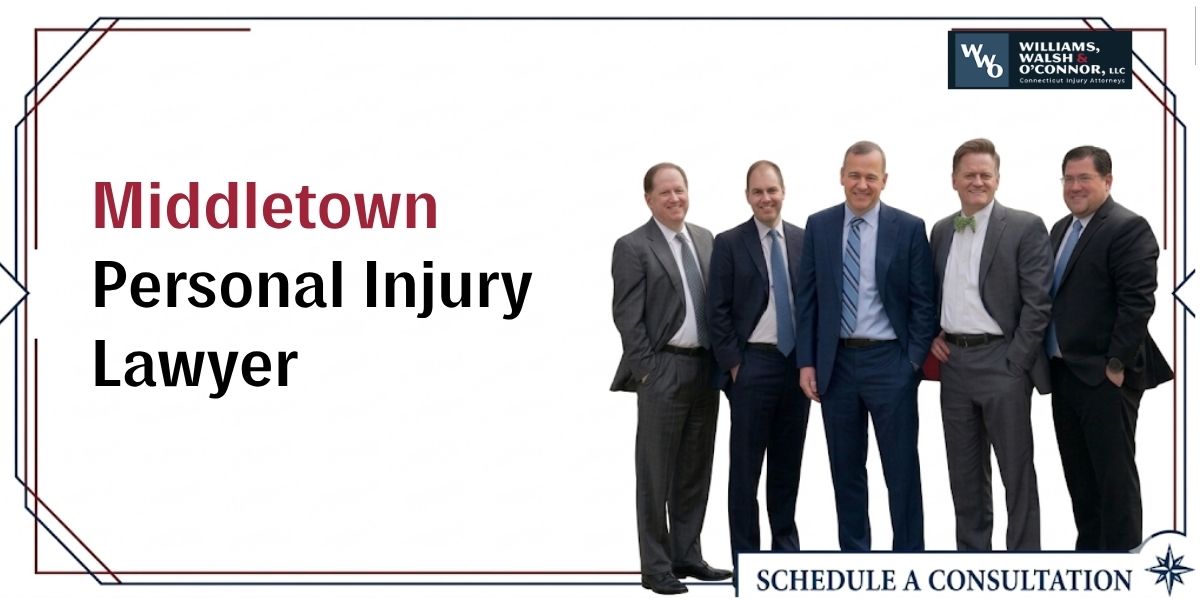
Accidents can result in unexpected injuries that catch people off guard. One minute you’re fine, and the next you’re trying to deal with medical bills, lost wages, and a painful recovery. If another person’s careless or negligent conduct was at fault, you have the right under Connecticut law to pursue compensation by filing a personal injury claim. An experienced Middletown personal injury lawyer can help you understand the law and build a strong claim.
About Williams, Walsh & O’Connor
When you’ve been hurt in an accident, your life changes. At Williams, Walsh & O’Connor, LLC, our Middletown personal injury lawyers know this from experience. With more than 150 years of combined legal experience and the highest marks of legal excellence from our peers, including AV Preeminent and Distinguished peer-review ratings, we’re here to help.
We guide you through every step of the process, from listening to your concerns to taking aggressive action to get you the money you need to recover. We work with insurance companies and take your case all the way to court, if necessary, always treating you with respect, compassion, and skillful advocacy.
Filing a Personal Injury Claim in Connecticut
If someone else’s carelessness has injured you, you can try to get money to pay for your medical bills, lost income, and other damages. In Connecticut, most personal injury claims start with an insurance claim. You can try to work out a settlement with the at-fault person’s insurance company. If that does not work, you can bring a claim in Connecticut Superior Court.
Claims begin with a document called a complaint. This document outlines who you are filing a claim against, the events that occurred, how you were injured, and the compensation you are seeking. Connecticut’s rules of civil procedure require the complaint to be properly formatted. Some types of claims also require more specific information to be included.
The Middlesex Judicial District Courthouse is in Middletown, CT, at 1 Court Street, Middletown, CT 06457. This courthouse addresses civil, criminal, and family cases in Middletown, Cromwell, Portland, and Durham. If your claim proceeds to court, it will likely be at this location.
Types of Personal Injury Claims
Personal injury laws can vary depending on the type of accident or injury that occurred. Knowing what type of personal injury you have is key to understanding your rights and options. Here are some of the most common types of personal injury cases:
- Car accidents. Injuries are brought on by careless drivers, such as those who drive while intoxicated or distracted. According to the Connecticut Crash Data Repository, in 2024, Hamden PD reported 1,512 road accidents.
- Bicycle accident. A bicycle accident can cause serious injuries when a driver fails to yield, drives while distracted, or otherwise fails to exercise reasonable care around cyclists. Injured bicyclists may pursue compensation for medical expenses, lost wages, and other damages when another party’s negligence caused the collision.
- Motorcycle accident. A motorcycle accident can result in severe injuries because riders have less protection than occupants of passenger vehicles. Determining how the crash occurred and who was responsible can be important when pursuing compensation for injuries and related losses.
- Truck accidents. Collisions involving commercial vehicles frequently call for familiarity with state and federal trucking laws. The Federal Motor Vehicle Safety Administration reported 1,705 large trucks or buses involved in accidents in Connecticut in 2024. 28 of these were fatal.
- Slips and falls. These are injuries received on dangerous or badly maintained property, such as wet floors or uneven surfaces.
- Swimming Pool Accident. A Swimming Pool Accident may occur because of unsafe conditions, inadequate supervision, defective equipment, or other hazardous circumstances. Depending on the cause of the accident, a property owner, operator, or another responsible party may be liable for injuries and resulting damages.
- Medical malpractice. Medical malpractice is when a healthcare professional treats a patient carelessly or incorrectly.
- Product liability. This includes damages resulting from dangerous or flawed products, such as machinery, automobiles, or consumer goods.
- Premises liability. Premises liability refers to accidents that occur on someone else’s property due to dangerous circumstances, such as poor upkeep or inadequate security.
Connecticut Statute of Limitations
The most critical rule to be aware of in any personal injury case is the statute of limitations. This is the deadline by which your claim must be filed in court. Your case gets automatically barred if you miss the deadline, regardless of its merit. Connecticut has a two-year statute of limitations for personal injury claims. This timeline begins either from the date you sustained your injury or from when you learned about your injury or should have learned about it.
There are a few exceptions to this rule, however. Connecticut law does allow that some events make it unfair to apply the normal deadline. If the at-fault party departs from the state, the statute of limitations can be suspended for as long as seven years. In addition, if the person who caused your injury intentionally conceals facts that would have put you on notice of your claim, the statute of limitations may be tolled until you discovered your injury.
There are unique notice procedures to follow when filing claims against the state or municipal governments, as these differ from those for private individuals. The deadlines for providing this notice are often much shorter than the normal statute of limitations. For instance, a claim for a personal injury that occurred on a state highway or sidewalk requires written notice to the Commissioner of Transportation within 90 days.
What Happens if You Share Some of the Responsibility
Many people worry that if they bear any responsibility for an accident, they are barred from recovering damages. Say you were speeding slightly, and someone else ran a red light. In Connecticut, the law is that you can still recover damages, as long as your share of the blame is less than 50%, but your recovery will be reduced in accordance with your responsibility.
If you were 10% at fault and have $20,000 in damages, you could recover $18,000. If you are found to be 51% or more at fault, you will likely not be able to recover anything. An exception to this rule is product liability cases, which follow a pure comparative negligence rule that allows you to recover, even if you are more at fault than the other side, so long as you are not 100% to blame.
Damages in a Personal Injury Case
One of the most common things someone is concerned about when they file a personal injury case is how much their claim is worth. The short answer is that it depends on the particular facts of your case, including how serious your injuries are, how much your ability to work has been affected, and how great your pain and suffering have been.
Both material and immaterial losses, including medical costs, missed income, diminished earning potential, property damage, and pain and suffering, are covered by compensatory damages. Punitive damages are intended to penalize particularly careless or malevolent behavior. Punitive damages are not frequently granted in personal injury cases in Connecticut and are restricted.
Hire a Personal Injury Lawyer
When you hire a personal injury lawyer, it can make all the difference in your case. They are experienced with Connecticut law, court procedures, and the tactics that insurance companies use to pay out as little as possible. An attorney takes care of the complex paperwork and filing deadlines and collects evidence to support your claim.
Your Middletown personal injury attorney can represent you to ensure you receive equitable compensation for your medical expenses, lost income, and your pain and suffering. Most importantly, a personal injury lawyer allows you to focus on recovery while they fight for your rights and pursue the maximum settlement or award.
FAQs
What Is the Average Settlement for Personal Injury in Connecticut?
In Connecticut, personal injury settlements can range from a few thousand dollars to millions, depending on the specifics of your case. Since each case is different, there isn’t an average settlement; however, certain factors will influence the worth of your claim. Comparative fault can also affect your recovery. An experienced attorney should be consulted to determine your specific entitlements in any legal situation.
What Should I Not Say to an Injury Lawyer?
When speaking with an injury lawyer, don’t accept blame, overstate injuries, or guess at the worth of your case. Avoid discussing your claim on social media or making unguided statements to insurance adjusters. While honesty and facts are key, be strategic. Extra information or speculation could undermine your position or offer advantages to the opposition in negotiation.
What Are the Odds of Winning a Personal Injury Claim?
The probability of success varies, depending on the facts, the strength of the evidence, the clarity of liability, and proper handling of the case. A large percentage of personal injury claims are settled before trial. If litigated, success is enhanced by full preparation of the case, credible witnesses, and clear documentation of damages. The odds of success are maximized by retaining an experienced attorney.
How Much Do Most Personal Injury Lawyers Charge?
Most personal injury attorneys work on a contingency fee basis. A contingency fee is a percentage of your recovery paid to the attorney only if you win a settlement or judgment. Each case may warrant a different percentage, depending on the law firm. You typically do not pay anything out of pocket if the lawyer is unable to recover on your behalf.
Contact Williams, Walsh & O’Connor, LLC Today
Williams, Walsh & O’Connor, LLC can help if you were injured in an accident. It is crucial to file your claim promptly because valuable evidence might become unavailable after the statutory deadline passes. An experienced attorney can guide you through the process, no matter if your case involves a car accident, slip and fall, medical malpractice, or another type of injury.
We can fight to secure the compensation you deserve and help you navigate the legal system so that an insurance company or legal technicality does not stand in the way of you recovering what is rightfully yours. Contact us today to get started.


