

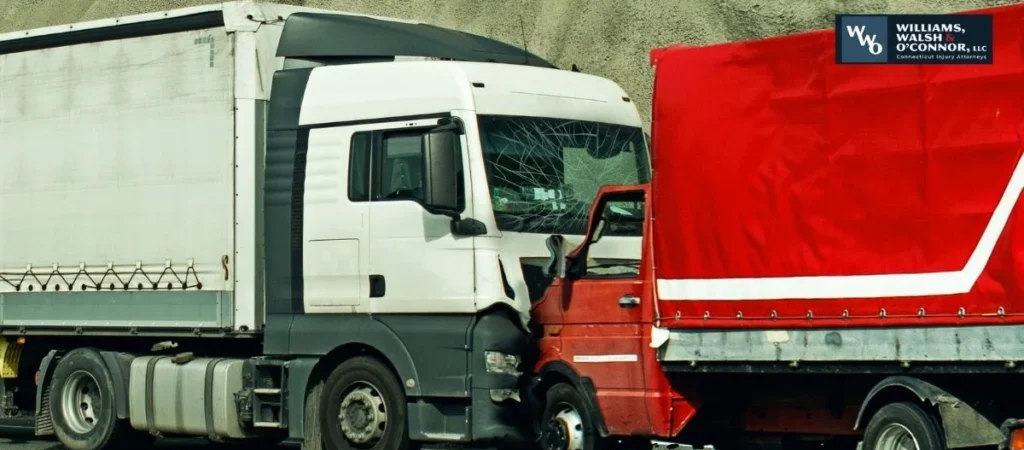

When you are involved in a crash with a commercial carrier, who is liable after an Amazon, FedEx, or UPS delivery truck accident depends on the circumstances. Liability can rest with the driver, the delivery company, a third-party contractor, or a maintenance providerzand often multiple parties at once. Determining Amazon, FedEx, and UPS delivery truck accident liability depends heavily on how the driver was classified, as companies like Amazon and FedEx frequently use independent contractors to shield themselves from direct liability.
Delivery Driver Negligence
Assigning financial accountability after a commercial collision requires identifying every party whose operational negligence or statutory breach contributed to the crash. When evaluating delivery driver crash liability in Connecticut, legal fault rarely rests on the motor vehicle operator alone. Establishing liability extends financial responsibility past the individual driver to encompass corporate parent companies, third-party logistics firms, and regional delivery contractors.
When a delivery driver causes a crash by speeding, texting, or running a light, they are directly at fault for their actions. But under Connecticut law, if the driver was on the clock making deliveries, their employer is also legally responsible for the crash through a rule called vicarious liability. If the company also cut corners by putting a dangerous operator on the road—a mistake known as negligent hiring—it opens up the company’s major commercial insurance coverage to pay for your medical bills and recovery.
Proving fault requires extracting digital evidence before data is overwritten. Attorneys analyze the electronic logging device, engine ECM data, and dashcams to detect speeding or fatigue. Matching telematics against hours-of-service logs provides concrete proof of driver error. Federal motor carrier safety data reveals that hours-of-service violations appear in roughly 30% of driver inspections where logs are reviewed—proving that driver exhaustion and corporate scheduling pressure are widespread issues.
Fast legal action stops carriers from deleting GPS and engine records. Hiring a crash reconstruction expert recreates the collision to prove a commercial driver breached safety standards. Securing this technical proof early reinforces Amazon, FedEx, and UPS delivery truck accident liability during settlement talks.
Commercial drivers owe a strict duty to prioritize public safety. Analyzing dispatch records and cargo securement manifests shows whether unrealistic quotas or shifted freight caused the crash, strengthening vicarious liability claims against the fleet operator.
Employer Liability and Vicarious Legal Responsibility
Holding a transportation enterprise accountable following a catastrophic Connecticut truck accident requires establishing that the driver was operating within the scope of their employment when the collision occurred. Under the common-law doctrine of vicarious liability (respondeat superior), an employer is financially responsible for harm caused by an employee performing authorized work duties.
When a commercial motor vehicle strikes a passenger automobile during an active delivery route, legal liability extends beyond the individual driver to encompass the corporate motor carrier that profits from the commercial transit.
Establishing vicarious liability opens the corporate parent’s primary liability insurance coverage, which carries significantly higher payout limits than a driver’s personal policy. Motor carriers frequently attempt to evade responsibility by claiming the driver was on a personal detour or operating outside scheduled hours.
Overcoming these defense tactics and refuting comparative negligence arguments requires enforcing immediate evidence preservation standards right after a collision to prove the operator was actively executing company business.
Proving that an employee was on the clock and furthering corporate business requires pulling objective digital and physical records. Legal teams analyze electronic engine control module (ECM) data, daily dispatch logs, app time-stamps, and shift records to lock in the timeline of the crash.
Comparing this telematics footprint against the official driver qualification file and mandatory pre-trip vehicle inspection reports demonstrates whether the enterprise maintained active operational control over the driver and equipment during the run.
Failing to establish vicarious liability early can severely restrict a victim’s financial recovery to secondary insurance policies or individual driver assets. Establishing corporate liability ensures that severe injuries, extensive medical bills, and long-term disability are fully covered by multi-tiered corporate coverage. Determining Amazon, FedEx, and UPS delivery truck accident liability early in the legal process protects victims facing life-altering financial and physical harm following a severe Connecticut truck accident.
Commercial carriers operating delivery fleets across state roadways are bound by strict statutory transportation codes and duty-of-care standards. Securing vicarious liability guarantees that corporate entities cannot escape financial responsibility for routine driver errors on local roads. Coupling vicarious claims with direct corporate oversight allegations, such as negligent hiring or training failures, maximizes available insurance coverage and forces corporate defense teams to evaluate total damages fairly.
Independent Contractor Classifications and Control Dynamics
Determining liability becomes significantly more complex when delivery companies utilize independent contractors, Delivery Service Partners, or owner-operators to complete routes.
While companies like Amazon frequently claim immunity from contractor crashes, Connecticut courts examine the actual degree of control the parent company exerts over daily operations. If a corporate enterprise controls driver schedules, routes, vehicle uniforms, and delivery metrics, courts may hold the parent motor carrier liable.
Under Connecticut common law, driver classification depends on the right-of-control test rather than the label used in a corporate contract. State courts examine whether the parent company controlled the time, place, and manner of the driver’s daily tasks. To prove this level of oversight, immediate evidence preservation is essential. Sending a formal spoliation letter prevents the destruction of digital route histories, app dispatches, and telematics needed for an expert crash reconstruction.
Establishing corporate control requires linking daily operational logs directly to the parent carrier and its regional contractors. Attorneys analyze app-based dispatch scores, driver performance metrics, and pre-trip vehicle inspection logs to demonstrate direct management. Reviewing routine maintenance records alongside third-party cargo securement manifests confirms whether tight delivery deadlines forced drivers to operate unsafe equipment or bypass essential safety protocols.
Proving that an independent contractor was effectively functioning as a legal employee completely changes the financial scope of your claim. Uncovering direct corporate control allows your legal team to tap into the parent carrier’s primary commercial insurance policy rather than relying on a driver’s limited individual coverage. Thoroughly investigating every entity involved in a Connecticut truck accident guarantees that any company managing a commercial motor vehicle fleet is held accountable alongside the primary motor carrier.
Interstate delivery enterprises cannot bypass public safety duties simply by hiring regional logistics companies to execute their routes. When contracted drivers cause catastrophic collisions, multi-layered insurance coverage, state comparative negligence defenses, and strict evidence preservation standards work together to determine final recovery. Identifying all responsible corporate entities ensures crash victims secure full financial compensation for their losses.
Negligent Hiring, Training, and Supervision Claims
Direct corporate negligence occurs when a motor carrier puts an unqualified, poorly trained, or dangerously exhausted driver on the road. Beyond vicarious liability for driver errors, Connecticut law holds transportation companies directly accountable if corporate oversight failures cause a crash.
When carriers push drivers to ignore statutory hours of service limits, analyzing electronic logging device records and engine ECM data reveals whether corporate scheduling pressure directly contributed to driver fatigue and the resulting collision.
Connecticut personal injury rules allow crash victims to pursue independent direct negligence claims against parent carriers alongside standard vicarious liability counts. Commercial carriers owe a duty of care to the public to screen every commercial driver through background checks, driving history reviews, and drug screenings.
Uncovering a pattern of ignoring safety violations allows crash reconstruction experts to establish direct Amazon, FedEx, and UPS delivery truck accident liability against parent entities during litigation.
Proving direct corporate fault requires auditing internal company files against real-time transit data. Legal teams examine routine cargo securement logs and app dispatch records to evaluate whether the carrier monitored its workforce. Demonstrating that management assigned demanding routes to drivers with known safety violations strengthens your primary vicarious liability claims by proving systemic corporate indifference to public safety.
Establishing direct hiring or supervision claims changes the financial dynamics of settlement negotiations. Demonstrating that a corporate motor carrier systematically ignored federal FMCSA regulations or forced operators to violate mandatory hours of service rules turns a simple driver error case into a clear demonstration of corporate recklessness. This evidence severely limits the defense’s ability to minimize claims or dispute liability.
Federal safety regulations mandate that commercial carriers maintain complete qualification records for every fleet driver. Enforcing immediate evidence preservation standards by issuing a formal spoliation letter prevents carriers from purging driver files or overwriting digital logs. Preserving these records immediately enables crash reconstruction specialists to prove direct corporate fault and hold the motor carrier fully accountable.
Vehicle Maintenance and Cargo Loading Contractors
Liability after a commercial delivery truck collision frequently extends beyond the driver and motor carrier to encompass third-party maintenance facilities and cargo loading contractors. When a crash stems from mechanical failure—such as brake fade, steering collapse, or tire blowout—the service vendor responsible for maintaining the fleet shares legal fault.
Under Connecticut tort law, any third-party vendor that performs work negligently or violates statutory safety standards can be named as a co-defendant in a personal injury lawsuit. Establishing third-party fault ensures that responsibility for a Connecticut truck accident is shared among all contributing parties rather than pinned solely on the operator. Broadening the scope of liability establishes full Amazon, FedEx, and UPS delivery truck accident liability across every negligent corporate entity.
Proving third-party mechanical or loading negligence requires auditing physical component parts, brake adjustment records, and weight station manifests. Forensic engineers examine component wear patterns and securement straps to pinpoint whether a repair shop skipped routine service or a freight contractor overloaded an axle. Linking these mechanical failures to your primary vicarious liability and negligent hiring claims significantly expands available commercial insurance coverage.
When catastrophic injuries result in damages that exceed a single policy limit, bringing secondary corporate defendants into the claim is essential to cover long-term care needs. Demonstrating that mechanical defects compounded driver fatigue or violations of hours-of-service rules prevents defense insurers from shifting blame onto external factors. Preserving electronic logging device entries and black box ECM data ensures that physical vehicle defects are tied directly to the timeline of the impact.
Federal safety codes strictly mandate that commercial motor carriers maintain systematic inspection, repair, and maintenance programs for all fleet vehicles. When service providers cut corners or ignore mandatory maintenance schedules, hiring a crash reconstruction expert proves whether mechanical failure contributed to a commercial driver losing control. Uncovering these maintenance breaches firmly establishes Amazon, FedEx, and UPS delivery truck accident liability across all responsible contractors.
Insurance Layers and Corporate Claim Handling Tactics
Commercial delivery carriers utilize multi-tiered, complex insurance policies designed to minimize overall financial exposure following a catastrophic crash. Obtaining full compensation requires looking beyond initial liability denials to uncover every primary, excess, and umbrella policy endorsement available.
Commercial fleet operators must disclose all primary and excess policy declaration pages upon receiving a formal legal demand. Navigating these corporate insurance structures requires understanding how state transportation codes and federal commercial vehicle regulations apply to each entity involved. Aggressively challenging insurance coverage disputes after a severe Connecticut truck accident forces the parent motor carrier to account for all harm caused by its commercial motor vehicle.
Finding hidden insurance policies right away stops company adjusters from using aggressive tactics to cut your payout or drag out negotiations. Insurance companies routinely invoke Connecticut’s comparative negligence laws to shift partial blame onto you, using allegations of shared fault to lower your claim’s value. Uncovering total insurance coverage details while defeating these shared-fault arguments requires enforcing strict evidence preservation standards immediately after the crash.
Navigating corporate insurance structures protects crash victims from settling prematurely for a fraction of their claim’s true value. Securing critical leverage during settlement talks requires extracting black box ECM data, auditing the driver’s complete driver qualification file, and analyzing routine vehicle inspection reports. Armed with this objective proof, your legal team forces corporate insurers to negotiate fairly and pay the full compensation required for long-term recovery.
Route Data, Electronic Logs, Camera Records, and Evidence Preservation
Modern commercial fleets generate extensive digital footprints. In Connecticut, these electronic records provide objective proof of conditions right before impact. Immediately freezing records and data is essential to establish vicarious liability and hold the delivery company accountable.
Trucking companies have a strict legal duty to preserve relevant evidence once notified of a pending claim. If a corporate motor carrier overwrites electronic logging device entries or destroys black box data in violation of federal FMCSA regulations, courts can impose severe spoliation sanctions.
Enforcing strict evidence preservation standards requires issuing an immediate, formal spoliation letter to the carrier, its insurers, and maintenance vendors. This legal demand forces them to lock down engine computer files, GPS logs, and communication records before routine overwrite schedules destroy them. From there, crash reconstruction experts extract and analyze this digital data to establish exact crash dynamics.
Securing digital proof early neutralizes common defense strategies aimed at deflecting fault. Securing vehicle inspection reports, maintenance records, and cargo securement logs prevents the defense from claiming pre-existing mechanical failure or shifting blame onto third parties. Fast legal action ensures all critical liability evidence is fully protected.
FAQs
Who Is Responsible if an Amazon Delivery Van Hits My Car?
Responsibility depends on whether the driver was an Amazon employee or an independent Delivery Service Partner (DSP). Under Connecticut law, Amazon is responsible if it controlled the driver’s schedule, routes, and safety rules. Securing relevant Connecticut legal guidance helps identify whether Amazon, the DSP, or their insurance companies must pay for your damages.
How Much Can You Get if You Get Hit by a FedEx Truck?
If you are hit by a FedEx truck, your compensation depends on your injuries, medical bills, and available insurance coverage. While FedEx carries multi-million-dollar policies, settlements rely heavily on proving fault and calculating lost wages. The attorneys at Williams, Walsh & O’Connor, LLC, pursue every dollar available to secure the full payout you deserve.
Are Amazon Drivers Responsible for Accidents?
Yes, Amazon drivers are directly responsible for crashes caused by their own negligence, such as speeding or texting. However, individual policies rarely cover severe injuries. Financial claims typically extend to Amazon’s local Delivery Service Partners (DSPs) or to Amazon itself if corporate route demands contributed to the crash.
What Happens if a UPS Truck Hits Your Car?
Because UPS drivers are company employees, UPS is usually legally and financially responsible for your accident. UPS acts as its own insurance company and has massive financial resources, but their adjusters work hard to protect their bottom line. Hiring a lawyer right away protects your rights by freezing critical data before it is deleted. It also ensures you take legal action well before Connecticut’s 2-year statute of limitations (C.G.S. § 52-584) expires.
Hire a Delivery Truck Accident Lawyer at Williams, Walsh & O’Connor, LLC
At Williams, Walsh & O’Connor, LLC, our trial attorneys bring over 150 years of combined legal experience to every case. We understand the complex multi-tiered insurance layers and high-stakes tactics used by defense teams—and we know how to secure the full compensation you deserve. Contact Williams, Walsh & O’Connor, LLC today for a free, confidential case evaluation.


